Welcome
My name is Ben Collins and I help small business.
I understand small business because I am one. I personally manage the tax and compliance of over 300 companies and 700 individuals. I take the time to understand all of my clients needs, so they can focus on what they do best.
I can help with company taxation, accounting, RTO consulting services, R&D tax incentive claims, governance, structuring and family business matters.
So if you need help, reach out.
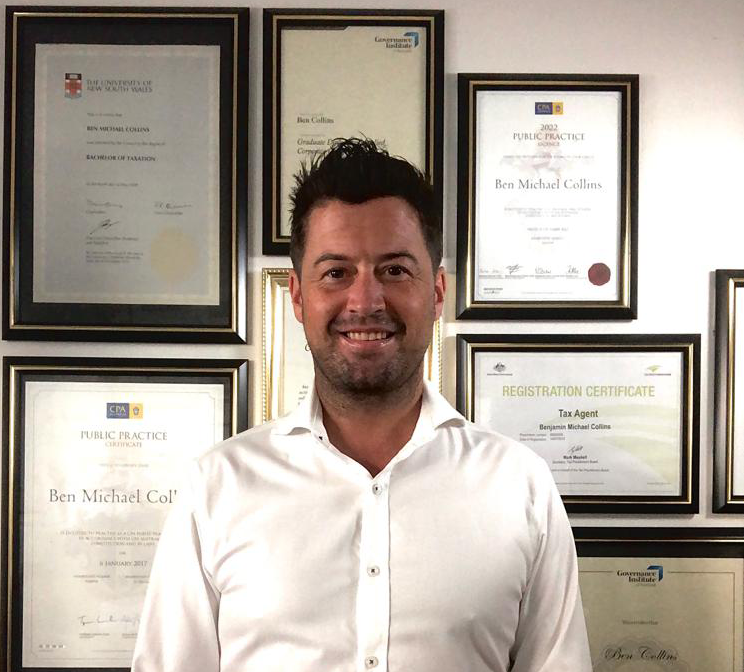
Chartered Tax Advisor (CTA)
Chartered Governance Professional
Chartered Company Secretary
Certified Practising Accountant (CPA)
Registered Tax Agent
Fellow, Governance Institute of Australia
Fellow, Institute of Company Secretaries and Administrators
Fellow, The Tax Institute
Member, CPA Australia
Graduate Diploma of Applied Corporate Governance (GIA)
Bachelor of Taxation (UNSW)